Low-carbon, high-temperature heat. Straight from the grid.
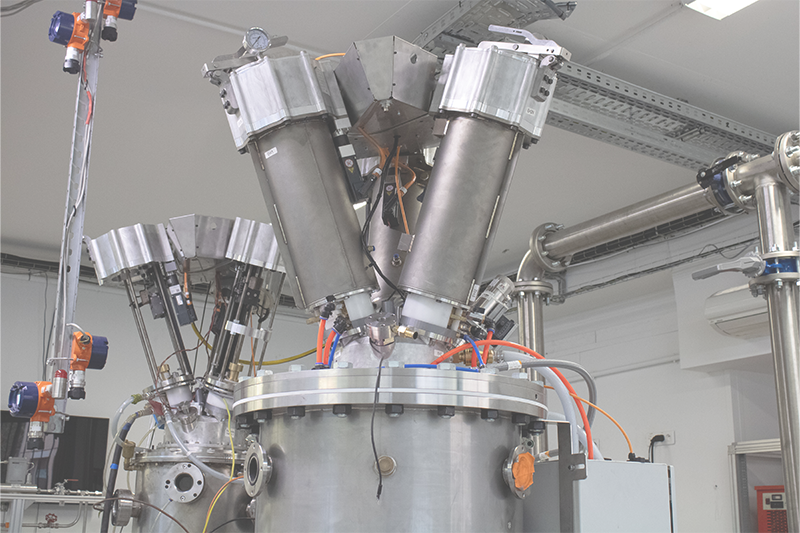
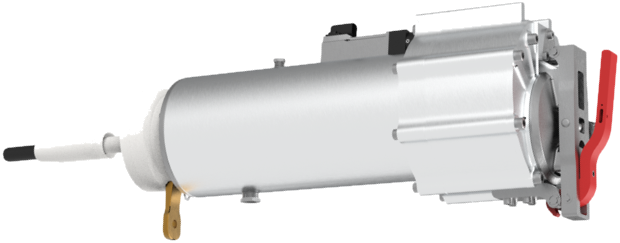
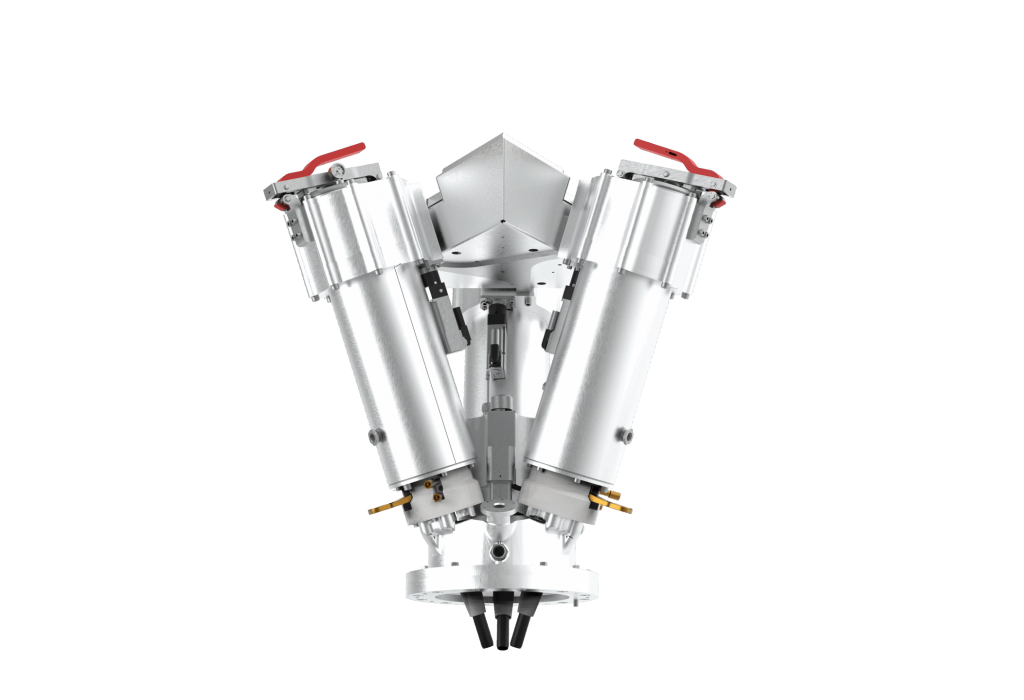
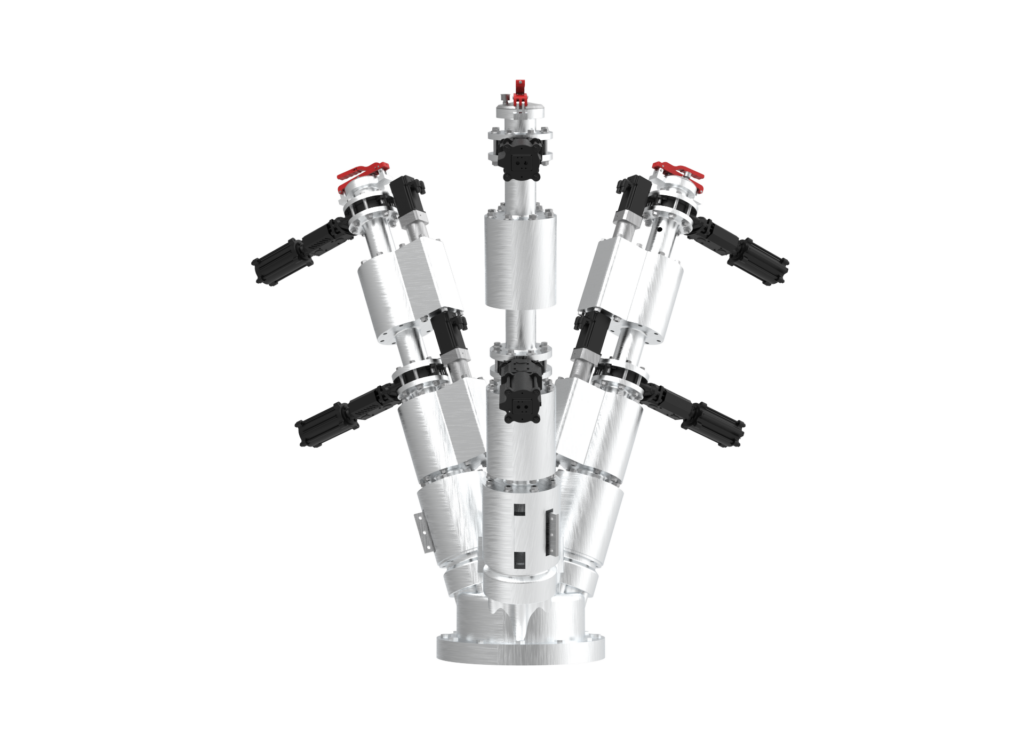
Our range of three-phase plasma torches is adaptable to a wide variety of industrial applications and operating conditions — from 30 kW pilots to MW-scale electrification.
A self-stabilised arc, with no rectifier and no magnetic field.
Today, industrial high-temperature heat is mainly provided by combustion, which generates significant CO₂ emissions. Plasma offers an electric alternative to decarbonise these processes.
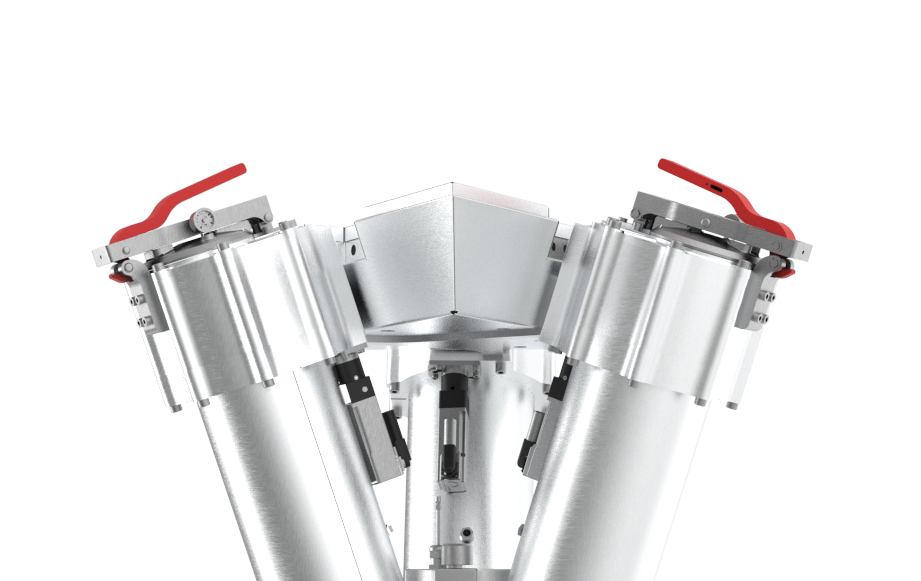
Unlike DC plasma torches, which need external magnetic fields to stabilise the arc between anode and cathode, Plenesys’ patented three-phase AC torch uses three electrodes — each connected to a phase — that alternately act as anode and cathode. The arc stabilises itself, directly at grid frequency: at 50 Hz, that is 300 arc discharges per second, evenly distributed across the electrode pairs.
Robust and designed for harsh environments, the torch operates under pressure and with dusty or hot feedstock.
Technical features
Everything you need to know about our three-phase torches.
Continuous operation
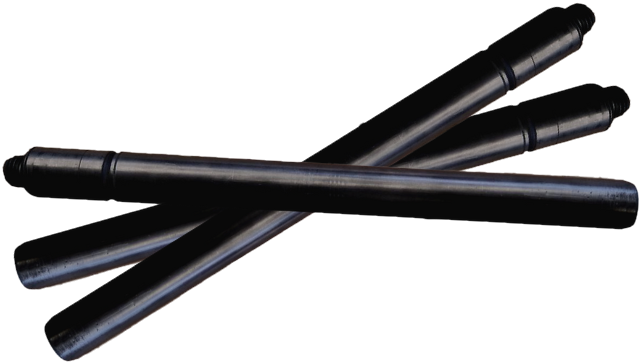
Consumed electrodes are replaced automatically, without interrupting plasma generation, thanks to a built-in electrode feeding system. Precise arc regulation keeps performance stable and downtime minimal, with rapid start-up and limited maintenance.
High efficiency
Thermal efficiencies above 90 %, enabled by graphite electrodes without direct water cooling — fewer thermal losses, more energy transferred to the process.
Scalable and modular
A simplified electrical architecture that runs directly on AC power, without an AC/DC rectifier, cuts both CAPEX and OPEX. Available from 30 kW to 2 MW and compatible with multiple process gases.
Flexible operation
Runs on a wide variety of gases, including streams with solid particles, across a broad pressure range, and can be mounted at different orientations.
Highly autonomous, intelligent torches
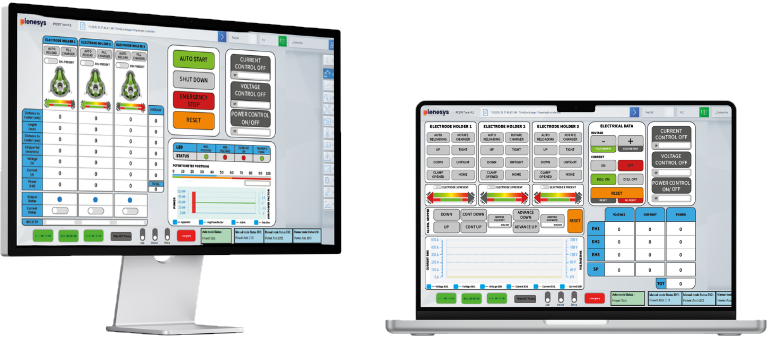
Automatic start-up, hands-free operation, target power control and automatic adaptation to new operating conditions. An ergonomic HMI and electrode-tip recognition software add safety, reliability and ease of use.
Specifications
Two ranges. One torch design.
Specifications can be adapted to project-specific requirements.