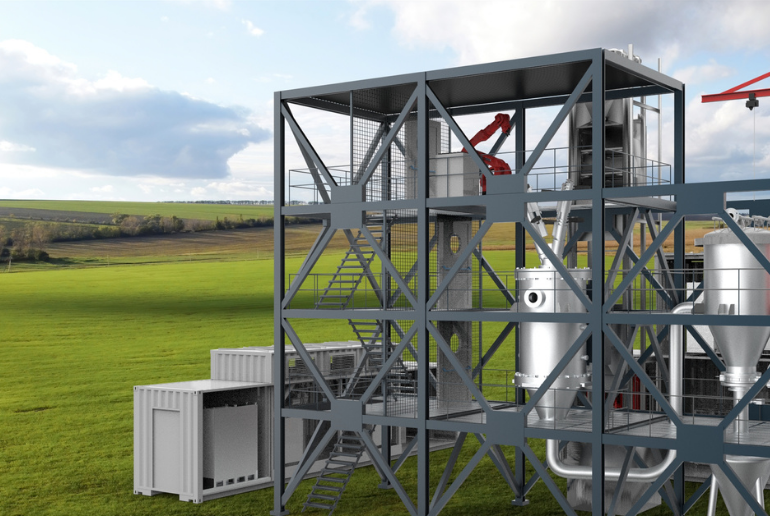
Incineration and landfill have limits. Plasma does not.
The treatment of industrial, municipal and hazardous waste is a major challenge for industries facing environmental constraints. Conventional technologies such as incineration and landfill present limitations in emissions, efficiency and residue management. Plasma-assisted high-temperature processes offer a robust and adaptable alternative — two of them below.
PLASMA GASIFICATION
Converting waste into energy.
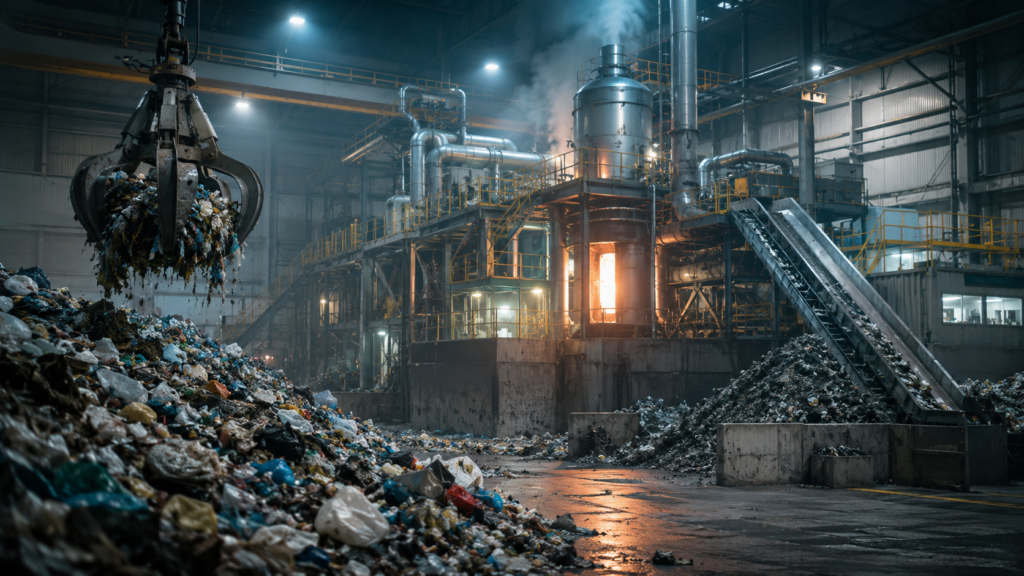
Gasification converts carbon-rich materials — biomass, municipal waste, industrial residues — into synthesis gas (syngas), mainly carbon monoxide and hydrogen, for heat and power or as feedstock for chemicals and synthetic fuels.
1
Limits of conventional gasification
Process heat (typically 800–1,200 °C) comes from partial combustion of fossil fuels or of the waste itself, leading to CO₂ emissions and by-products such as tars and fly ash that need additional treatment.
2
Plasma integration for high-quality syngas
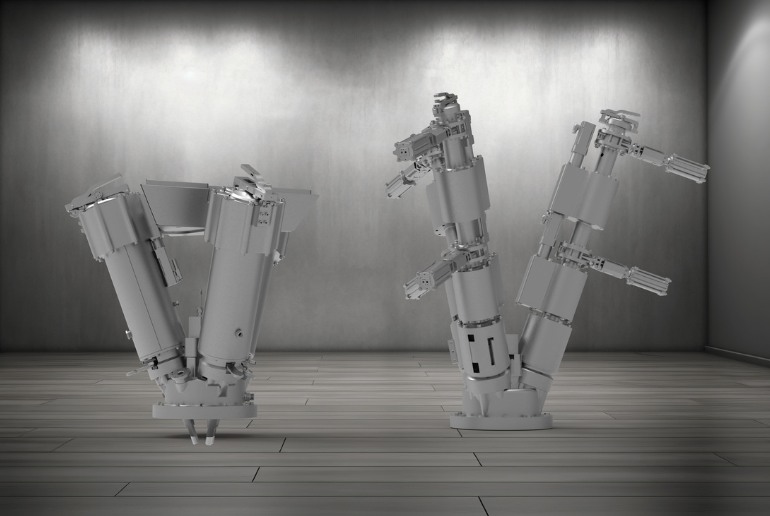
A three-phase Plenesys torch integrated directly into the gasifier supplies process heat electrically, without combustion: no direct CO₂, less tar, fewer impurities. On renewable electricity it aligns with net-zero objectives while keeping process flexibility.
3
Post-treatment of existing plants
The torch can also treat syngas leaving a conventional gasifier, breaking down residual tars and vitrifying ash — stabilising solid residues and improving syngas purity for chemical synthesis, hydrogen production or power generation.
PLASMA VITRIFICATION
Hazardous waste, locked in glass.
Plasma vitrification converts toxic residues into a stable, glass-like material that is chemically inert and durable: harmful components are immobilised in a dense vitreous matrix, preventing leaching and significantly reducing waste volume.
1
How the process works
The Plenesys plasma torch generates the extreme temperatures that melt the inorganic fraction of the waste. The molten material is then rapidly cooled, trapping heavy metals, oxides and complex organic compounds in a solid, non-leachable structure. Powered entirely by electricity, it eliminates direct CO₂ at the point of use, with precise temperature control for streams from industrial slags to contaminated chemical residues.
2
Industrial benefits and applications
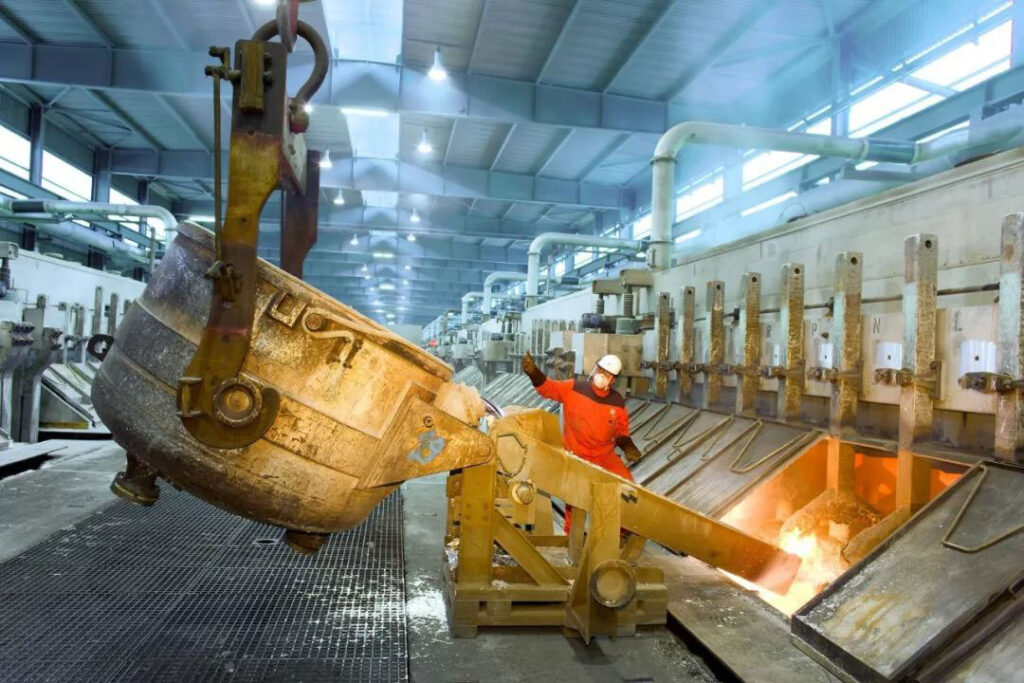
In aluminium smelting, vitrification stabilises slag and anode residues for safe storage or reuse. In steelmaking, oxide-rich slags become inert aggregates for construction. In cement, fly ash can be converted into stable materials, in some cases reusable as clinker additives. It equally applies to chemical and medical waste.
3
Extended use in gas treatment
As a post-treatment stage in waste gasification plants, the torch treats syngas streams leaving conventional gasifiers, cracking residual tars and vitrifying ash particles — better purification, better syngas quality, better environmental performance.